

As the owner of a SaaS company, it's important to structure your sales team in a way that maximizes its potential.
- Should you have a transactional sales team, or a quota-carrying, field team?
- Is it better to have a team of generalists or a sales specialist who focuses on one solution?
- Should sales and marketing be separated into two distinct teams, or should they work together?
- What other roles should be represented on the team?
- Do you need to hire full-time or part-time?
These are fair questions that require thoughtful consideration.
In this guide, we'll try to answer them all.
We'll also discuss the types of processes, tools, and methodologies that can help you create an effective sales team.
Elements That Every SaaS Sales Team Must Have
Before we get into the nitty-gritty of sales team structure, we need to take a look at what's required for an effective team.
Even though every team will be different, depending on the company's size, sales environment, market dynamics, and product offering, here are some elements that every team should consider:
Centralized Communications
In today's world, it's possible to be working on four or five different projects at once. With so much access to customers and other members of the team, it's important to maintain centralized communications.
Centralized communications ensure that there is one location for all conversations. This will help the team prioritize better, communicate more effectively, and identify opportunities faster.
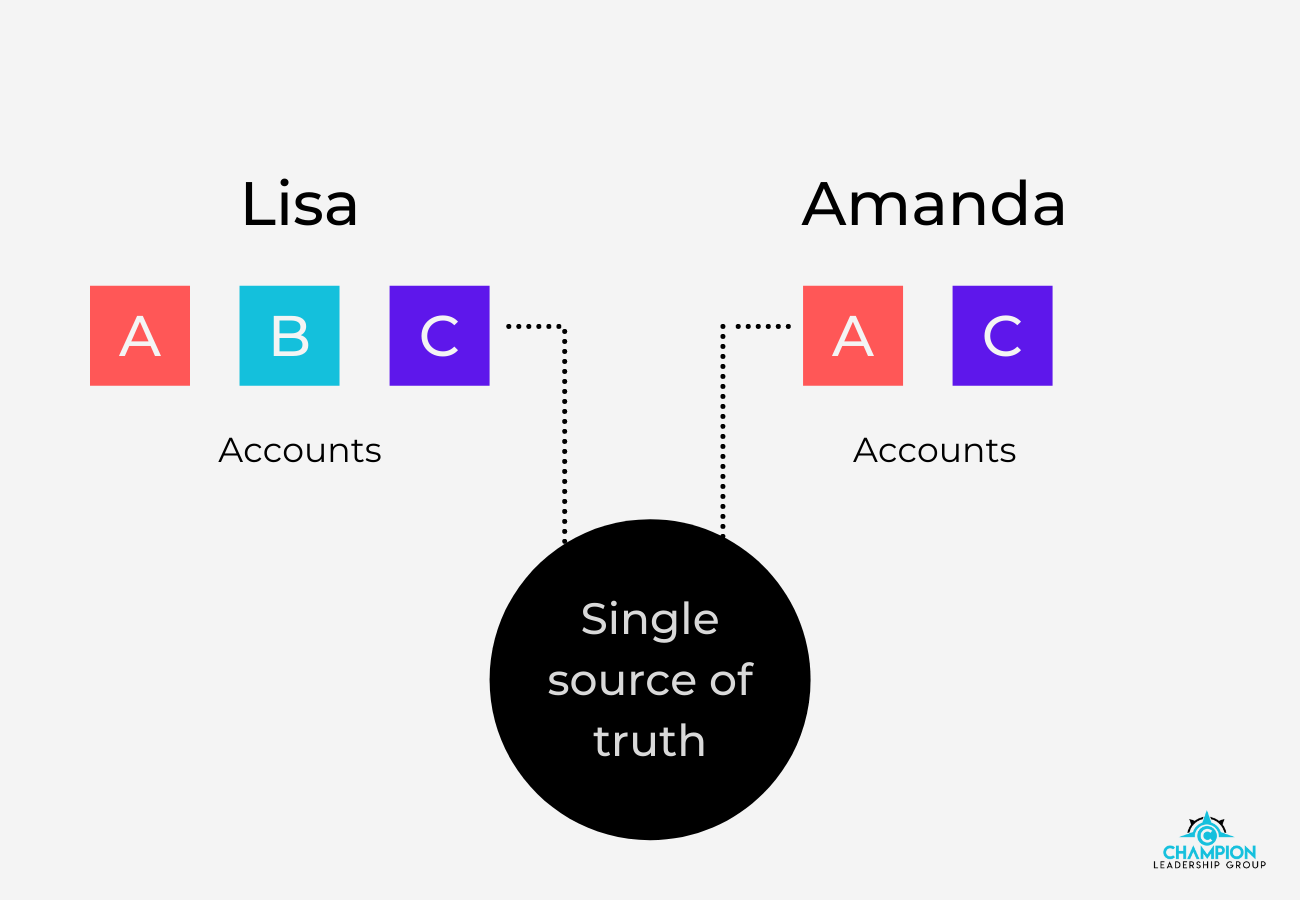
Ideally, this includes a dedicated chat for the sales team that is accessible to everyone involved in the sales process.
For example, Slack is a great tool for centralizing the sales team's communications. It allows team members to create private channels, which can be used for things like customer conversations, relationship building, processes, and best practices.
But, of course, you can also use email, Basecamp, or any other method that works best for your team.
Sales Operations
Having solid sales operations can be the difference between a great year and an awful one. This can be especially true for brands that operate in a sales-driven environment.
Having the right tools and processes in place ensures everyone stays on top of their goals, customers, and internal initiatives.
For example, everyone on the sales team needs to know what their quota is each month, how they're performing against it, and if they're above or below the average.
They need to know if their quota has changed and what the new metrics are.
All of this information should be clearly outlined in your sales ops tools.
Ideally, these tools should be exclusively for team use, and sales ops should have access to provide important updates whenever necessary.
Some of the most crucial operations you should consider include:
- New client onboarding: Having a solid new client onboarding process ensures that customers get started as quickly as possible, and sales reps can focus on helping them reach their goals.
- Sales conversations: All sales conversations should be documented and tracked from start to finish. Sales ops can use this information to help reps reach their goals, as well as scope out potential deals.
- Sales forecast accuracy: It should be easy to view forecasts for the current quarter, as well as historical projections. Sales ops can help adjust forecasts accurately, and sales reps can stay on track to hit their goals.
- Reporting: There should be a clear, easy-to-read sales report that contains information like top customers, conversion rates, revenue by team members, and revenue by product. Ideally, this reporting data should be accessible to the entire team and updated every week.
- Sales team management: Who is responsible for what on the team? Who manages the top performers? Who makes decisions about commission percentages? All of this should be clearly defined.
In short, sales operations should provide transparency and clear communication for the entire team.
The Right People
This might seem obvious, but the right people are crucial to an effective sales team. Every organization has a unique culture, so it's important to hire people that fit.

That said, there are certain traits and skills that everyone on the team should have:
- Ability to prioritize: When under pressure, sales reps should be able to prioritize effectively and focus on the most important tasks.
- Prior experience: If someone has had previous experience building and managing a sales team, they're more likely to excel in the same role.
- Strong work ethic: This is one of the most important traits to look for in a sales professional.
- Adaptability: As companies scale, there are always new processes in place to help reps be more successful. New hires must get on board quickly.
No matter how you structure your sales team, sales operations tools and processes will always help everyone stay on track.
Having the right people in place means you're more likely to be successful. If someone isn't the right fit for your team, it's better to find out early and make a change.
The Right Technology
As companies scale, it can be tempting to hand off tasks like reporting and pipeline management. While there's nothing wrong with this approach, it might not be the best fit for your organization.
For example, when sales teams are small and scrappy, they can use everyday technology to manage day-to-day tasks like customer data, forecasts, and reporting.
However, when you scale to dozens of reps across multiple locations, all of that data can get lost in translation.
The right technology ensures data accuracy and consistency, as well as seamless communication across the entire team.
At the very list, you should have:
- A CRM platform: This is where all customer data should be stored. Ideally, this platform will also connect to your email client and enhance communication between reps and customers.
- Dashboards, reporting, and alerts: There should be a clear system that shows reps how to meet their goals. This might include reporting on daily, weekly, or monthly KPIs. This information should be accessible to everyone.
- Sales call tracking software: This will help you keep track of every sales conversation.
- Sales playbooks: These are essentially detailed checklists for each step in the sales process.
- Recruiting tools: Hiring the right people is a tough task – especially when you have multiple open positions to fill. These tools enable recruiters to find and vet the best applicants.
Standardized Processes
Finally, it's crucial to create a sales process that's effective and easy to follow. The right process is crucial for managing customers from start to finish, as well as identifying deals that might be ready for a demo.
There should be a system in place that helps reps work efficiently and meet their targets.
Reps should know exactly what they need to do and when. This means that you should break down every step into individual tasks.
For example, many sales reps start by sending an email. Once the customer replies, they'll follow up and try to set up a phone call.
Many reps might only know about these two steps, but there's a lot that happens before and after — like qualifying the lead to see if they're a good fit.
Beyond knowing what to do, reps need to know when to do it. This means scheduling tasks in advance, so they're prepared for critical deadlines — like sending a monthly update to customers.
If your reps are getting everything done on time, you'll be ready to take on more customers.
The Most Popular Sales Team Structures
Now that we know what a successful sales team looks like, we can look at how you should structure your team. Ideally, there should be at least three people on your team:
- A sales manager who oversees the team and helps reps develop their skills.
- A lead-generation specialist who finds new potential customers.
- A deal-closer who follows up with prospects to move deals along.
While this setup might be the most traditional, there are plenty of options for how to structure your team. For example, you might want to include a customer-success manager instead of a sales manager — or you might want to hire more than one deal-closer.
Whatever team you decide to build, it's important that everyone has a clear role and knows what they need to do.
The only way that your team will be successful is if everyone works together. This means setting clear goals, holding each other accountable, and celebrating wins together as a team.
That said, let's explore a few different sales team structures you can implement:
1. The “Hockey-Stick” Structure
This is the most common structure for most SaaS sales teams. It's pretty straightforward since everyone has a specific role.
Typically, you'll have one sales manager and two to three other reps and sales assistants. The simplest version of this structure is a V-shape inverted, where the reps report to the manager.
There's also an option to make the structure a hockey stick (also called a “stair-step”), where the manager reports to a VP of Sales. This business structure is good when you want to split up the manager's job into two parts.
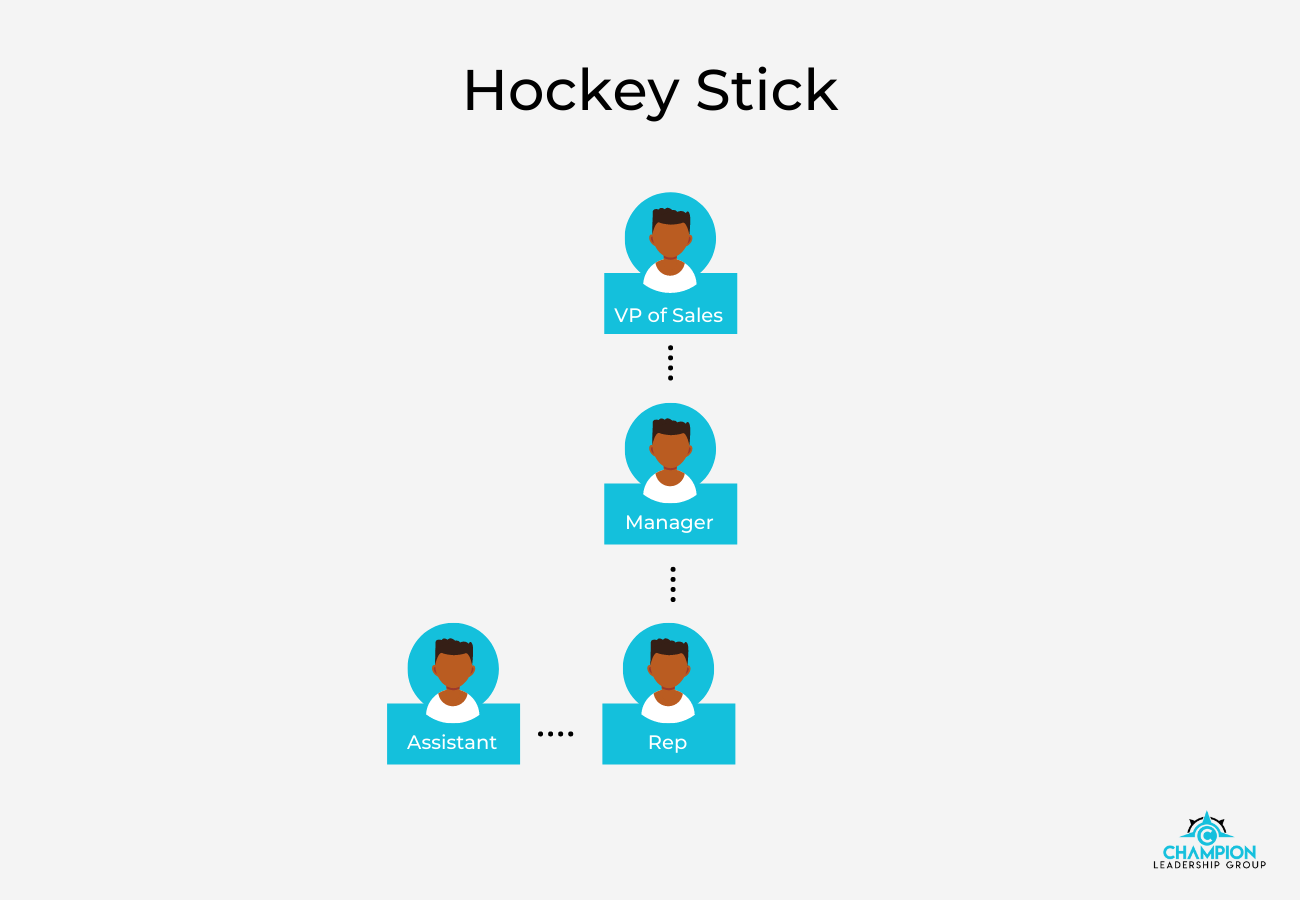
For example, in the hockey-stick structure, your sales manager can focus on training and sales coaching. Meanwhile, the VP of Sales is responsible for finding new customers and managing the sales process from start to finish.
2. The “Tiered” Structure
This is an interesting way to structure your sales team. Instead of splitting up responsibilities by function (like the hockey-stick), it assigns tasks by tier.
For example, you could have an “Acquisition Manager” who manages the lead-generation specialist and a “Business Development Manager” who manages the deal-closer.
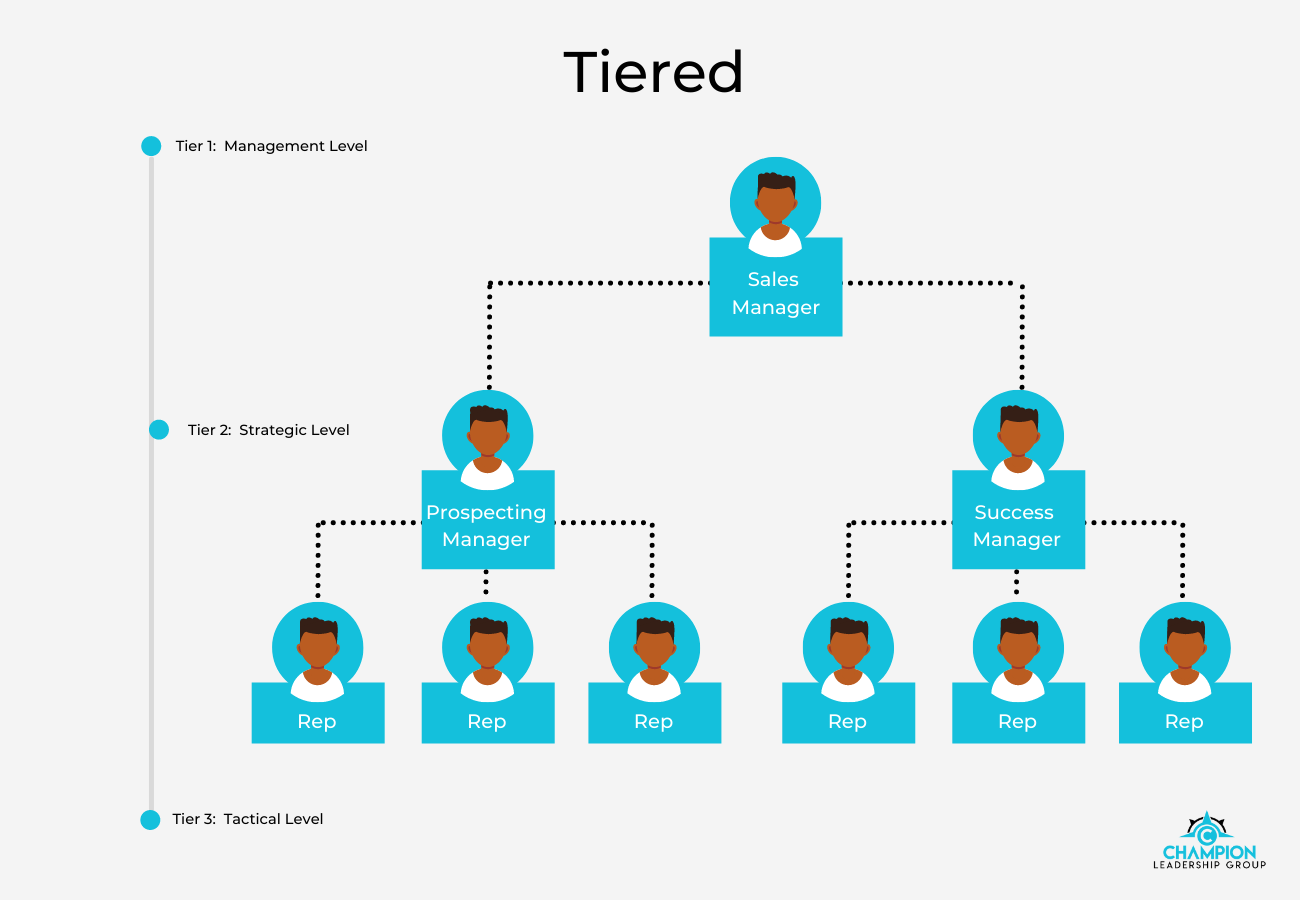
This structure works best when your team is consistently bringing in new deals. It also works if your team tends to close deals more quickly — since you can delegate some of the legwork to lead-generation specialists.
3. The “Team of Teams” Structure
This is a common structure for large companies with a lot of sales reps. Instead of micromanaging each rep, you let them manage themselves.
You'll need to set up some sort of hierarchy for this structure. For example, you can organize your reps into “regions” and give each region its own leader.
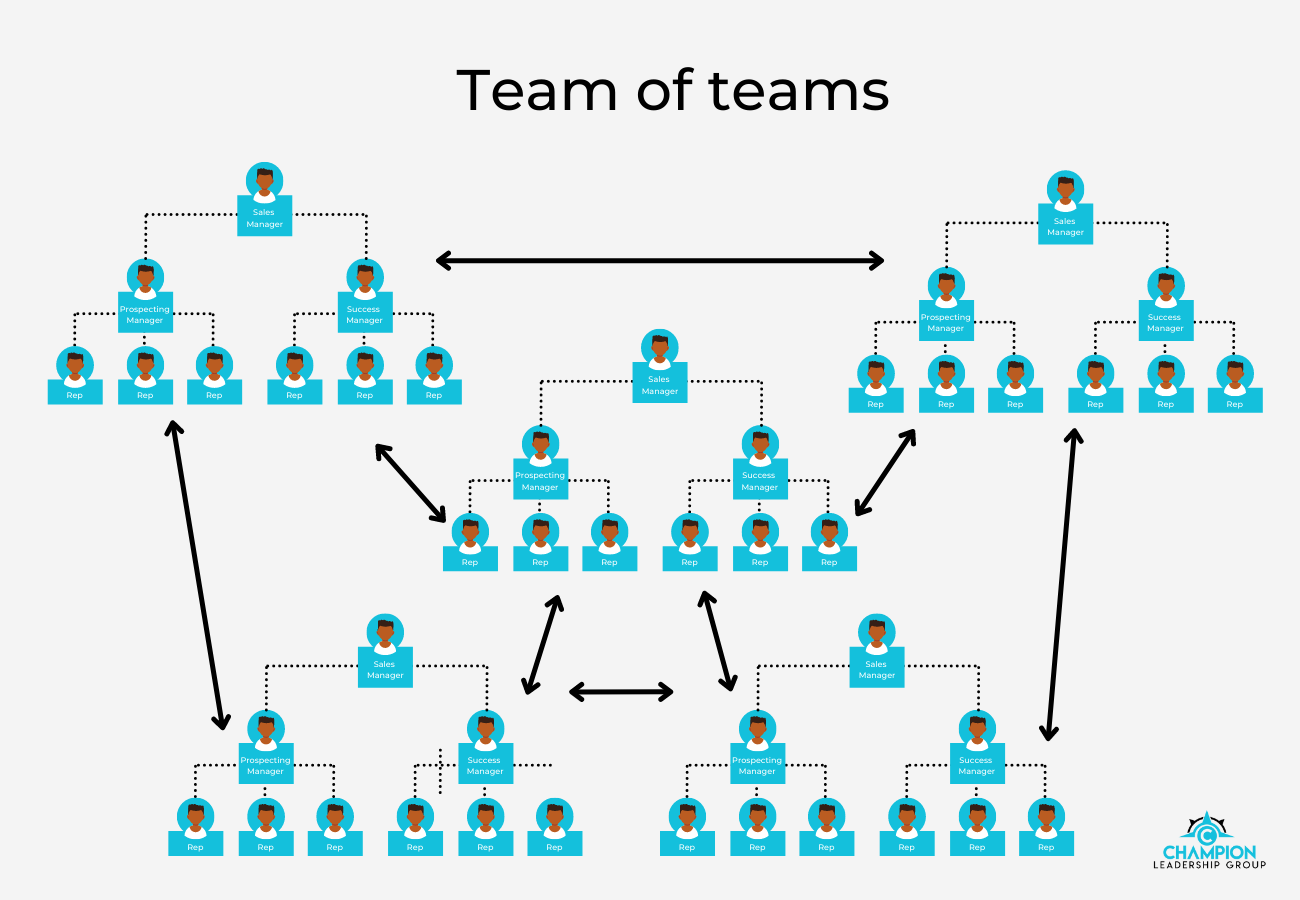
This approach is only recommended for companies with a really big sales team. Otherwise, it's too difficult for one manager to keep track of — and you'll end up with a disorganized sales team.
4. The “Matrix” Structure
This structure is similar to the team of teams, but it's more complex. Since it organizes reps into “teams” and “tiers,” it's often used when you have reps that are good at different things.
For example, if you had a team of great lead-eneration specialists, you could put them all on the same team. Then, your top deal-closer would be part of a separate tier so they could focus on closing the biggest deals.
This is another structure that only works if you have a moderately big sales team.
5. The “Functional” Structure
This structure puts a bigger emphasis on expertise rather than workflow.
For example, you might have one rep that specializes in lead generation and another rep who specializes in closing deals. You could combine these task-specialists into a “Sales Team” with one manager, but they would still report directly to you.
This structure works best if you have a lot of different types of deals coming in. For example, if you're selling to very different types of customers, you might need different types of reps.
How To Choose the Right Structure for Your Organization
At this point, you might be thinking, “Which structure should I use?”
The answer depends heavily on the size of your company and what type of deals you're bringing in.
For example, if you have a really small sales team (like two or three reps), you can probably get away with a “hockey-stick” structure. That way, your manager can split up his or her time between selling and training.
If you have a lot of reps (10-15), you might need to organize them into multiple tiers or regions.
As your sales team grows, you'll probably want to experiment with different structures and try to find the one that fits your business best.
When you find a structure that works, try to stick with it for at least six months before making any changes.
After all, change takes time. And it can be tough to go back once you've settled on a structure that works.
Just remember; there's no “perfect” structure.
The best system is the one that makes your team more productive.
So, you'll need to experiment with several different structures before finding the one that works best.


